What Does Land Clearing for Development Actually Cost?
Plan Land Clearing for Development Before the First Machine Arrives
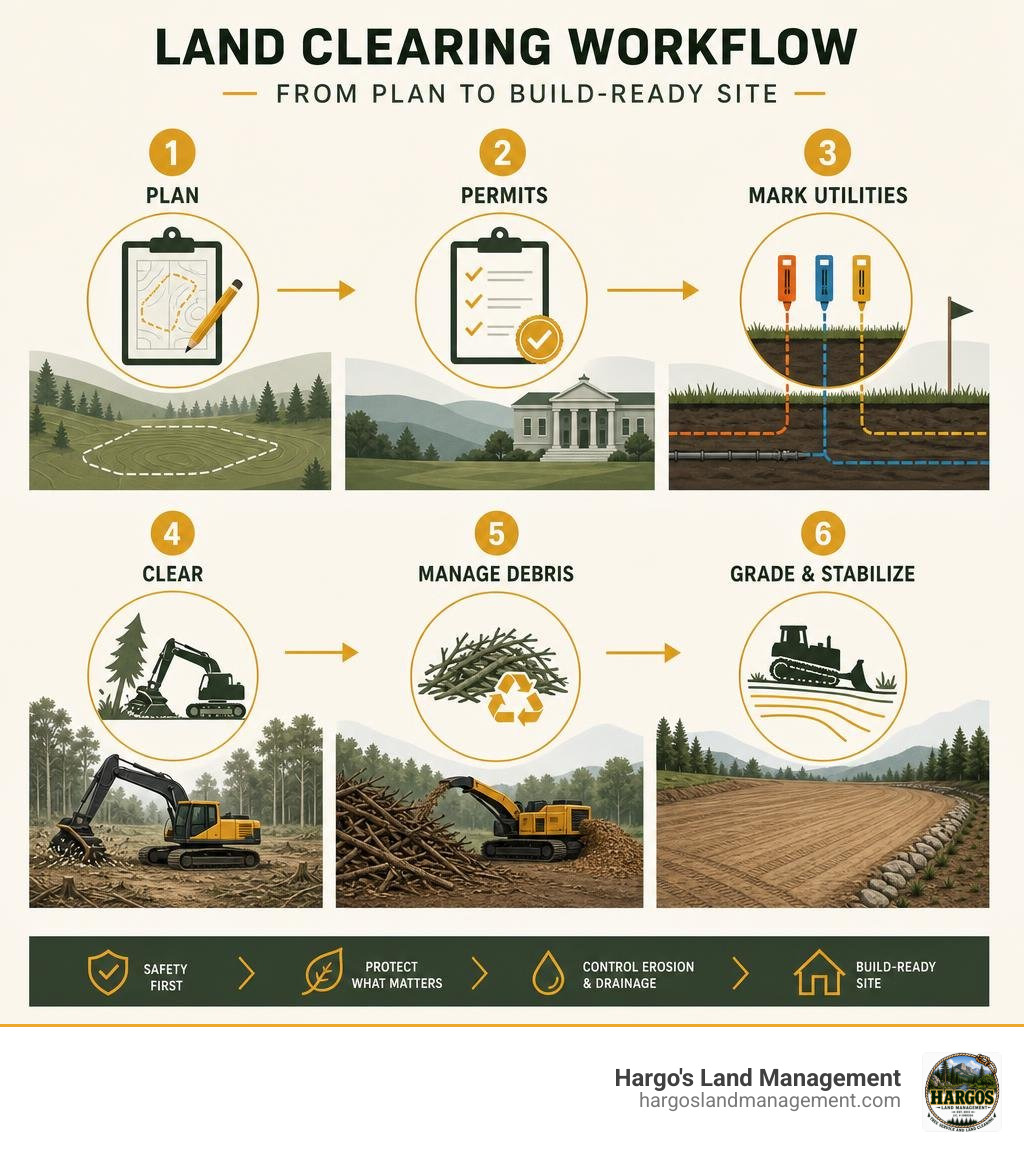
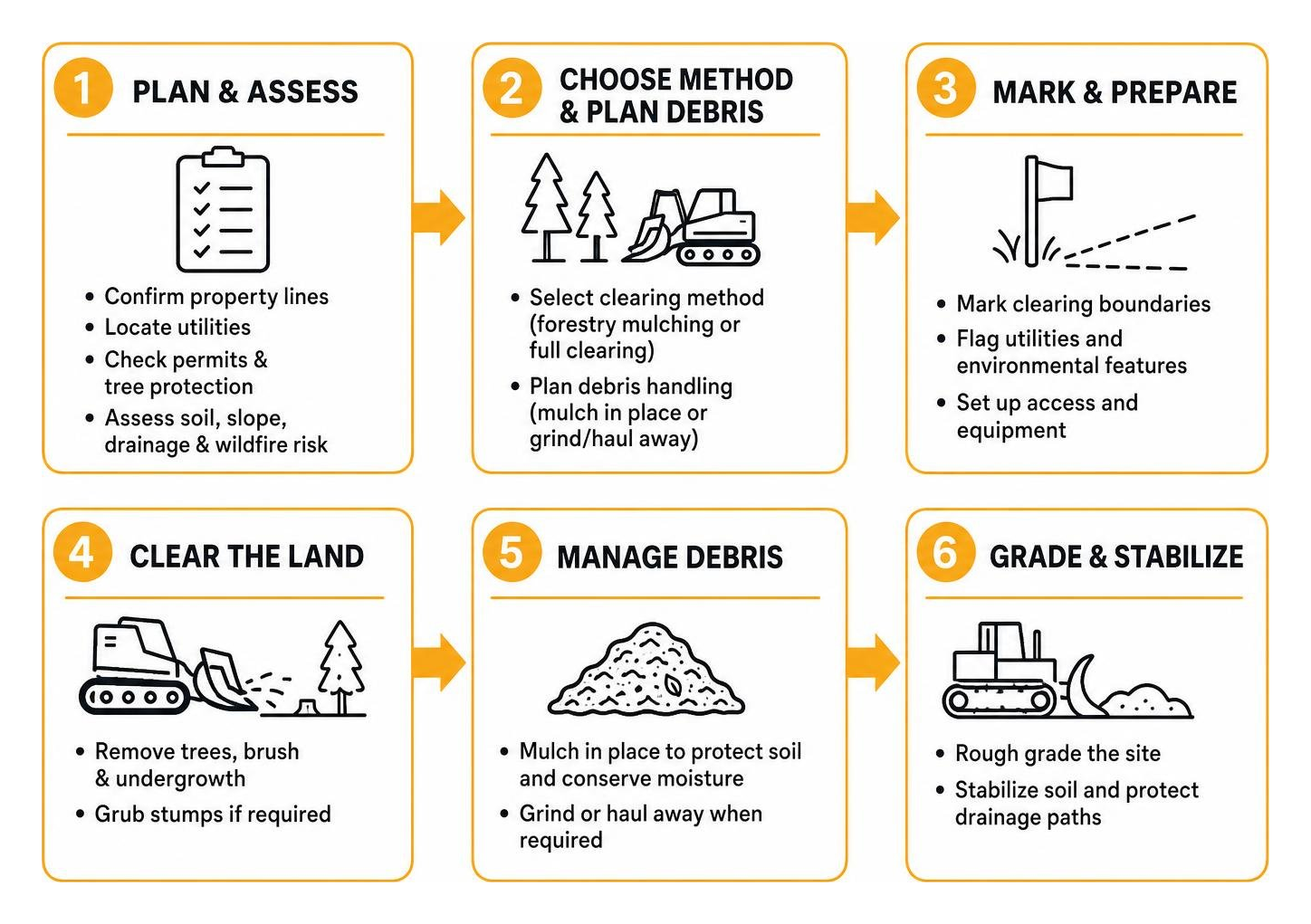
Land clearing for development should begin with a site plan, not a bulldozer. First, confirm property lines and utility locations, identify permit and tree-protection requirements, assess soil, slope, drainage, and wildfire risks, then choose a clearing method and debris plan that fit the future building area.
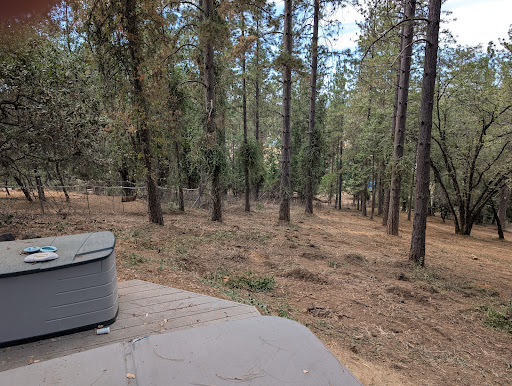
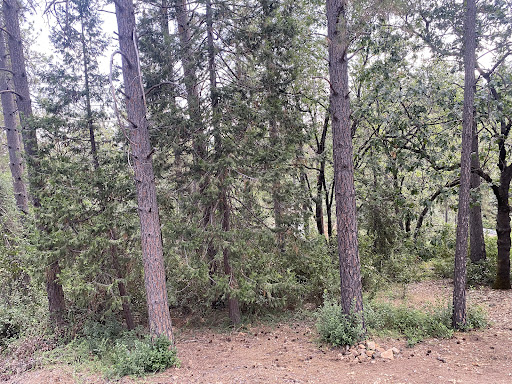
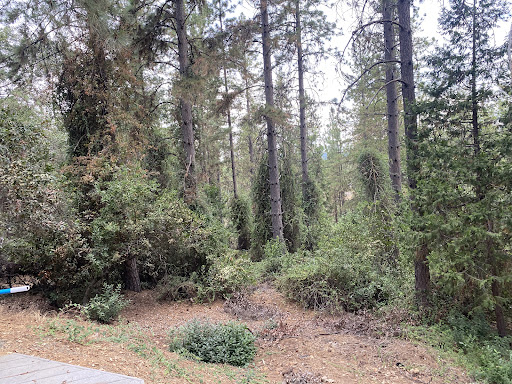
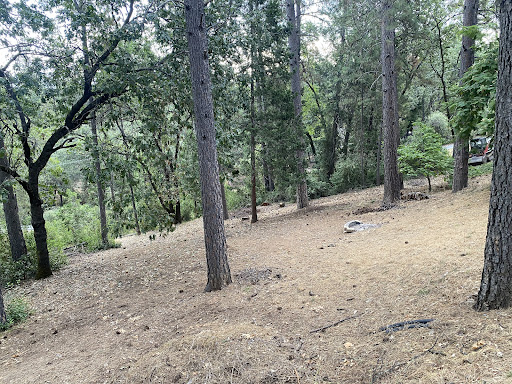
For a budget baseline, forestry mulching commonly runs about $2,700 to $3,500 per acre. Full dozer clearing costs more, especially when stumps must be removed and debris is ground or hauled away. On wooded, sloped El Dorado County properties, access, tree size, rock, wet ground, and disposal can change the final price quickly.
The key is to clear only what the project truly needs. Protecting drainage paths, retained trees, and defensible-space zones can reduce erosion, preserve usable shade, and prevent costly rework before grading or construction begins.
Understanding Land Clearing: Methods, Scope, and Machinery
Transforming raw acreage into a viable building site is an engineered process. Many people assume land clearing simply means knocking down whatever is in the way, but modern site preparation demands precision. Surface clearing takes care of the visible brush, undergrowth, and fallen limbs, while root grubbing extracts the below-ground root systems that would otherwise rot and destabilize structural foundations.
At Hargo’s Land Management, our approach to brush and land clearing balances speed, cost efficiency, and ground stability. Topsoil preservation is vital: scraping away the rich, organic upper soil layer leaves bare mineral dirt that erodes under the first heavy rain. Selecting the proper machinery—from compact track loaders to heavy excavators—ensures your project starts on solid ground without unnecessary environmental degradation.
Forestry Mulching and Mastication Techniques
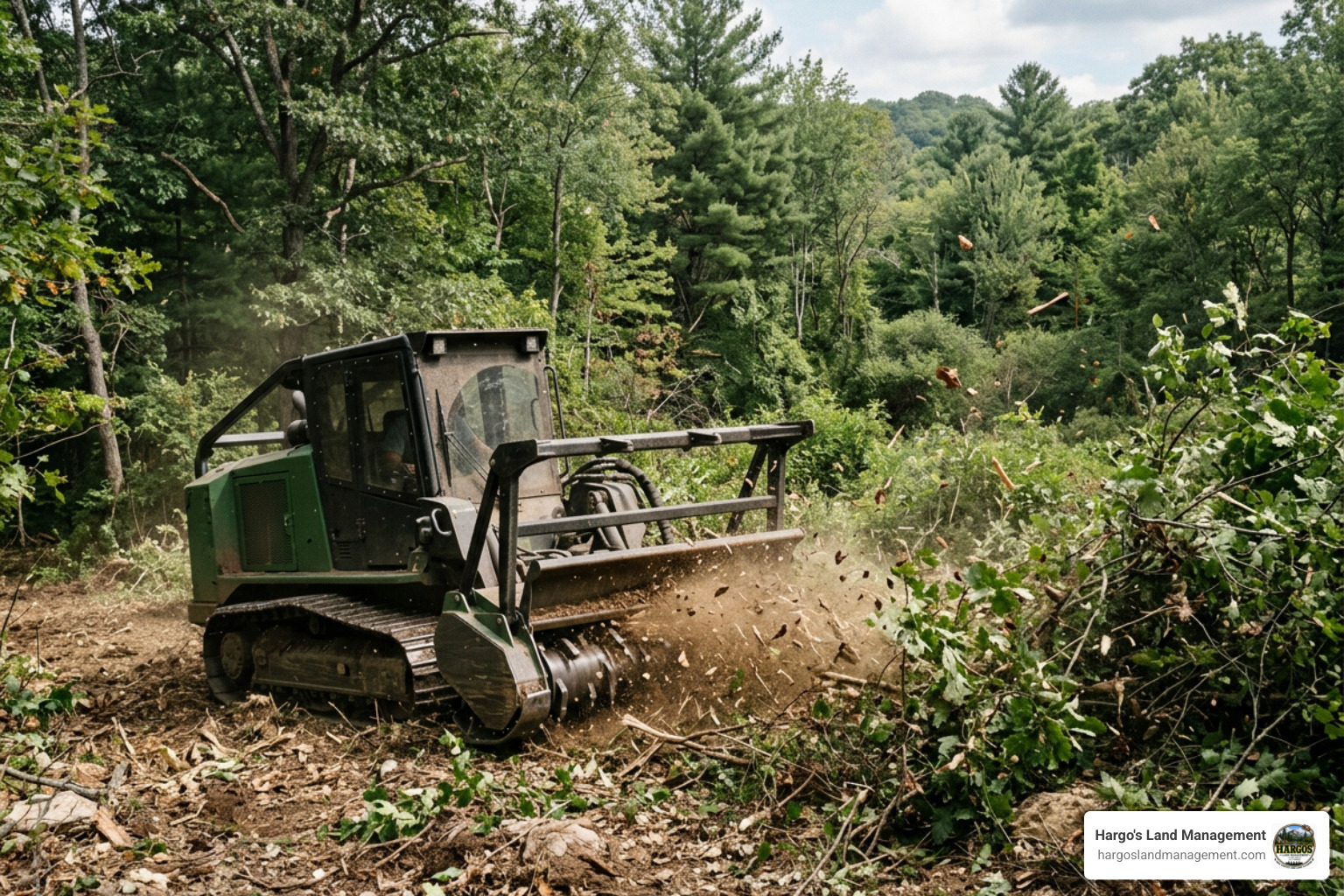
Forestry mulching uses specialized cutting heads mounted on track loaders or purpose-built tractors to shred standing trees, saplings, and brush into a fine, uniform layer of organic mulch.
Our specialized mastication services grind unwanted vegetation right where it stands. Rather than creating massive debris piles that require burning or hauling, mulching deposits the material directly back onto the forest floor. This blanket shields bare earth against raindrops, retains valuable ground moisture, and naturally recycles nutrients back into the soil while completely eliminating the cost of off-site trucking.
Traditional Bulldozing, Pushover, and Cut-and-Grind Operations
When building structural pads, parking lots, or roadways, surface mulching alone will not suffice. Foundations require full root extraction to prevent uneven settling over time. Traditional bulldozing (often called the pushover method) uses heavy dozers to uproot trees and push root balls clear of structural footprints.
Cut-and-grind operations offer a systematic alternative: crews fell mature timber with chainsaws or feller bunchers, process large logs, and feed limbs into industrial tub grinders or chippers. Municipalities enforce strict Clearing & Grading Development Standards to ensure that when soil is disturbed at this depth, engineered fill is placed in controlled lifts of 12 inches or less and properly compacted under geotechnical supervision.
Selective Clearing vs Full Building Pad Excavation
Not every development requires 100% clearcutting. In fact, clearcutting an entire parcel from property line to property line is often a major mistake.
- Selective Clearing: Targets only the underbrush, invasive species, and hazardous trees within designated work zones while preserving healthy, mature canopy in setbacks and buffer zones.
- Full Building Pad Excavation: Strips all surface vegetation and root systems down to bare mineral subsoil within the actual engineered building envelope, driveway corridors, and utility easements.
Balancing these two approaches keeps civil engineering footprints tidy while saving you thousands of dollars in earthwork and erosion control.
Complete Cost Breakdown of Land Clearing for Development per Acre
Project budgets depend on site acreage, vegetation density, terrain slope, and debris handling. Let’s look at realistic numbers to help you budget your next development phase accurately.
Per-Acre Clearing Cost Ranges by Method and Vegetation Density
| Land Clearing Method | Average Cost per Acre | Best Use Cases | Primary Advantages |
|---|---|---|---|
| Forestry Mulching | $2,700 – $3,500 | Fuel reduction, pasture expansion, underbrush clearing | No hauling costs, immediate erosion barrier, minimal soil disturbance |
| Dozer Clearing (Bladed to Side) | $4,250 – $5,800 | Large rural acreage, rough access roads, fence lines | Rapid ground clearance, moves large boulders and stumps |
| Dozer Clearing (On-Site Grinding) | $6,000 – $8,200 | Commercial pads, residential subdivisions with mulch needs | Complete root extraction, leaves usable mulch on-site |
| Dozer Clearing (Full Off-Site Haul) | $8,000 – $11,000 | Tight urban parcels, zero-burn zones, premium commercial pads | Leaves an entirely clear, debris-free footprint ready for dirt work |
Note: Base rates generally apply to light-to-medium brush and trees up to 5 inches in diameter. Heavy timber stands and steep slopes will increase equipment time.
Key Site Factors Driving the Cost of Land Clearing for Development
No two parcels are identical, and several site-specific variables drive real-world estimates:
- Slope Steepness: Steep hillsides limit machinery travel speed and require specialized tracked masticators, increasing machine operating hours.
- Tree Caliper and Stand Density: Felling and stump-grubbing mature 24-inch hardwoods requires heavier excavators than shredding 4-inch pine saplings.
- Soil Saturation and Weather: Saturated ground bogs down equipment and risks heavy soil rutting. Civil standards classify heavy rain as rates exceeding 0.30 inches per hour, which can halt heavy earthmoving entirely.
- Site Access and Logistics: Narrow mountain roads, low-hanging utility lines, or remote parcels add transport time for lowboys and support trucks.
- Rock and Subsurface Obstructions: Boulders require specialized hydraulic thumbs or hammer attachments to dislodge before grading crews can work.
Hidden Expenses: Stumps, Boundary Surveys, and Grading Dirt Work
Surprises can strain a site development budget. Boundary surveying is essential to avoid boundary disputes with neighbors; professional land surveys cost between $500 to a few thousand dollars, climbing to $20,000+ on complex, high-acreage tracts.
Stump removal is another area where costs add up. While professional PTO-driven grinders run between $2,400 and $4,000 for equipment acquisition, hiring mechanical stump grinding ensures stumps are ground 12 to 18 inches below grade. Once ground, holes must be backfilled with clean soil and mechanically compacted to prevent future ground settling under driveways and patios.
Essential Pre-Clearing Planning, Site Surveys, and Environmental Permits
A smooth clearing operation starts with regulatory compliance and accurate property mapping long before tracks touch dirt.
Land Disturbance Permits and Municipal Tree Protection Standards
Most jurisdictions require formal Land Disturbance Permits before any mechanized clearing or grading begins. Basic clearing and grubbing permit fees often start around $250, with site development fees scaling at roughly $30 per disturbed acre.
Permits often mandate specific tree conservation benchmarks. For example, municipal codes like the ARTICLE II Land-Disturbing Activities Ordinance frequently require developers to maintain a minimum 50% tree canopy cover over a 30-year maturity period (roughly 1,600 Tree Quality Points per acre). Failing to set up Tree Protection Zones (TPZ) around root structures can result in costly stop-work orders and fines.
Utility Marking, Geotechnical Soil Testing, and Boundary Verification
Never drop an excavator bucket into the dirt without calling 811 to locate buried gas, electric, water, and fiber-optic utilities. Pair this with geotechnical soil core sampling to determine water table depths, bedrock ledges, and soil bearing capacity. Knowing your soil’s composition prevents surprises during structural pad excavation.
Phased vs Full-Site Land Clearing for Development Strategies
Clearing a 20-acre parcel all at once can leave acres of bare dirt exposed to wind and rain for months. Phased clearing aligns site work with actual construction schedules.
By utilizing comprehensive vegetation management, developers clear the primary access corridors and Phase 1 building pads first. This approach establishes stable staging areas, limits open soil exposure, and simplifies stormwater management.
Managing Drainage, Grading, and Post-Clearing Erosion Control
Clearing vegetation alters the natural hydrology of a site. When root networks and canopy cover are removed, rainwater hits the ground with full force, accelerating surface runoff and creating ruts.
Stormwater Runoff, Swales, and Retention Basin Integration
Civil engineering drawings must integrate clear stormwater controls prior to clearing. Silt fences, check dams, and temporary sediment basins capture runoff before it reaches public roadways or natural streams. Clearing crews must preserve mandatory buffer zones around natural waterways—typically 10 to 50 meters depending on stream order classifications—to safeguard natural drainage channels.
Soil Stabilization and Hydroseeding Best Practices
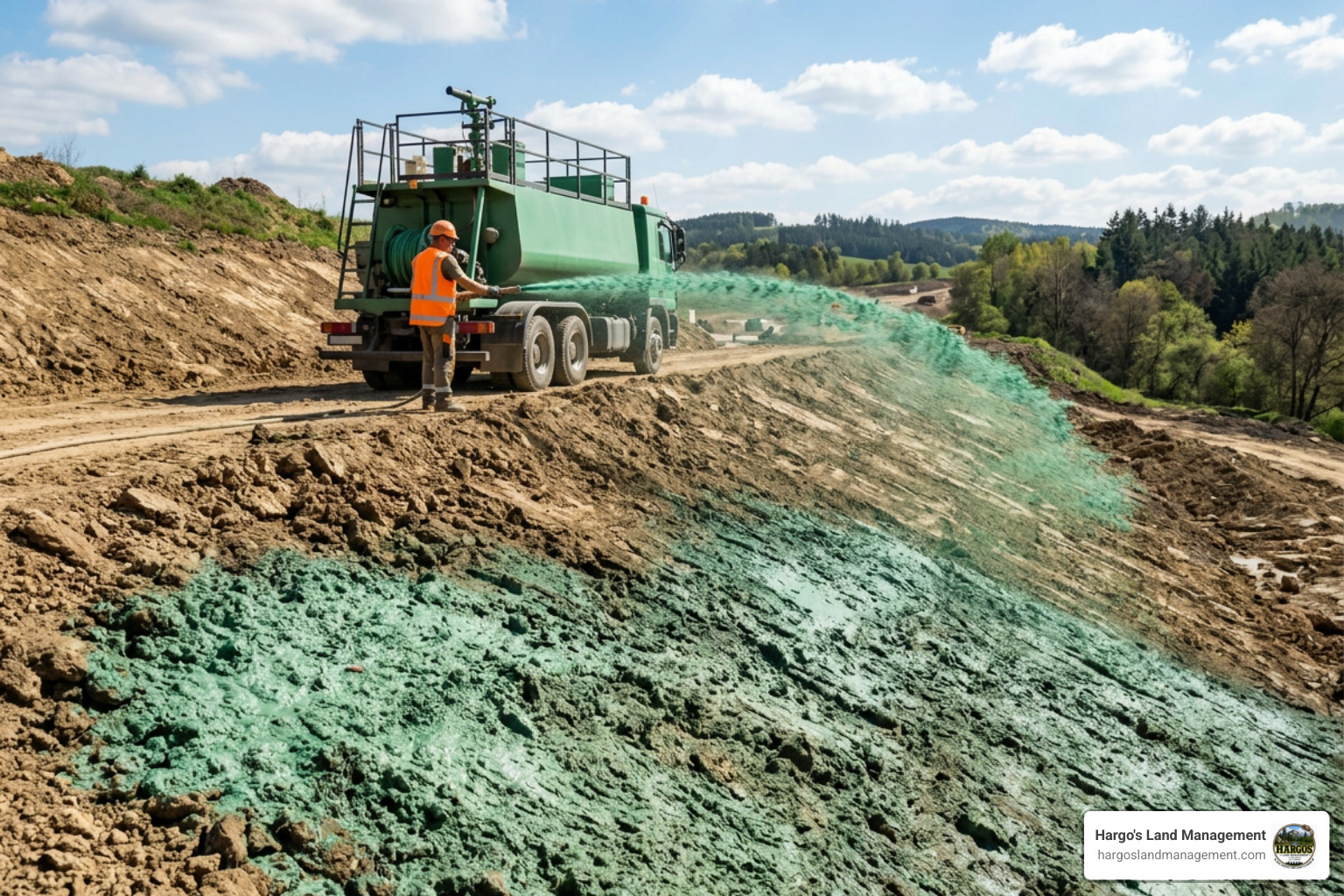
Once land is cleared and rough-graded, exposed slopes must be stabilized immediately. We recommend hydroseeding erosion control as the fastest, most reliable method for site stabilization.
Hydroseeding sprays a slurry of water, seed, wood-fiber mulch, and tackifiers across bare ground. The mulch slurry bonds to the soil within hours, locking dirt particles in place while accelerating seed germination to create a durable vegetative root mat.
Mitigating Wildfire Dangers and Establishing Defensible Space
In fire-prone areas throughout Northern California, site preparation must account for wildfire safety. Clearing dead brush and thinning out ladder fuels dramatically helps reduce wildfire dangers for future structures.
Establishing proper defensible space clearing creates safety buffers around future home envelopes, drives, and property boundaries:
- Zone 0 (0–5 feet): The immediate ember-resistant zone around future foundation walls.
- Zone 1 (5–30 feet): Lean, clean, and green zone with separated tree canopies and manicured ground cover.
- Zone 2 (30–100 feet): Reduced fuel zone where brush is masticated, lower tree limbs are pruned up 6–10 feet, and dead vegetation is eliminated.
Debris Management, Sustainable Forestry, and Timber Repurposing
Managing cleared debris sustainably protects your project budget and local landfills. In 2018, U.S. construction and demolition activities generated 145 million tons of debris that ended up in landfills. Modern development practices prioritize recycling organic wood waste directly on the property.
On-Site Chipping vs Off-Site Hauling Logistics
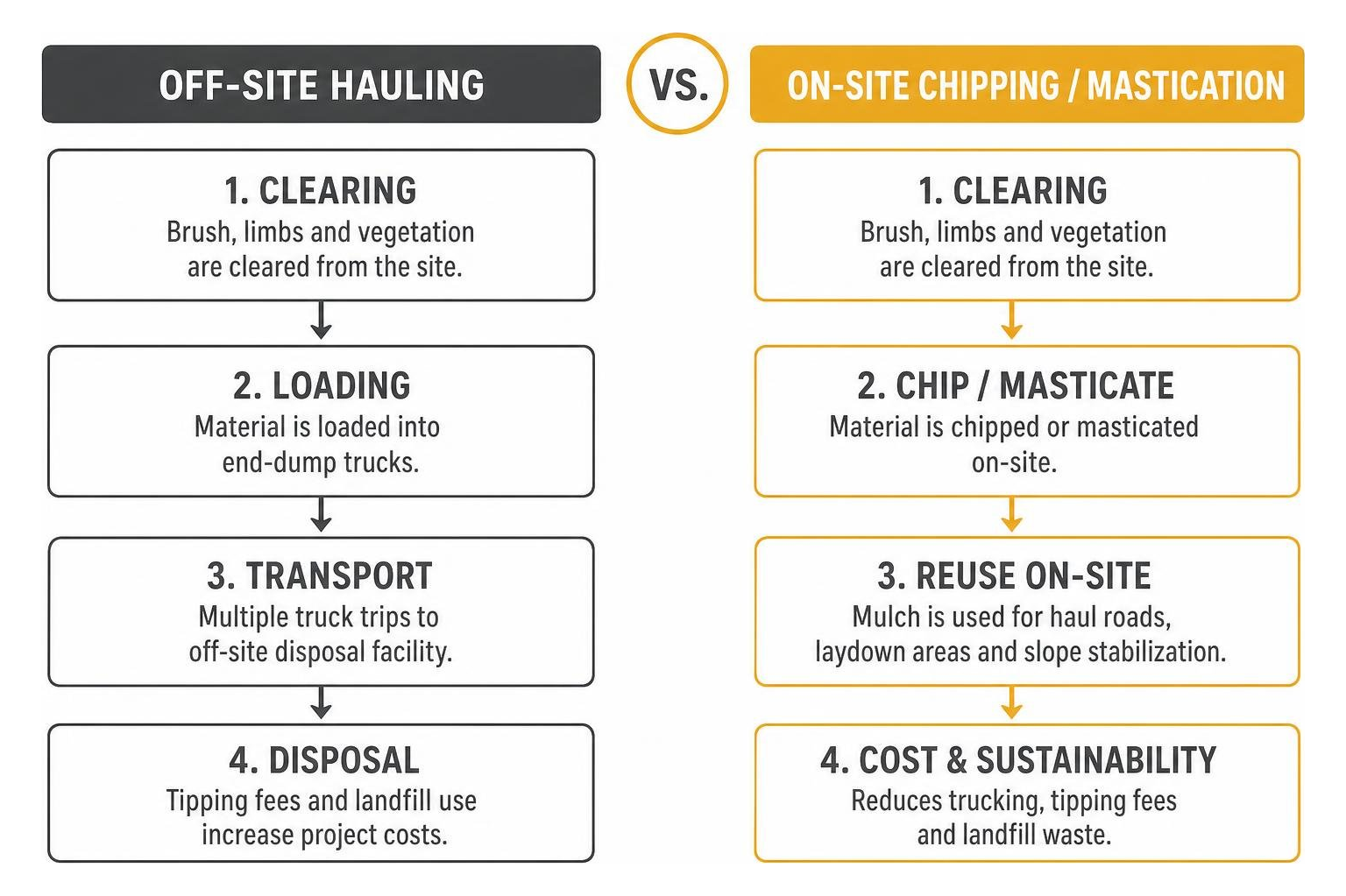
Open-pile burning is heavily restricted by regional air quality management districts and county burn bans. Hauling green waste off-site requires fleets of end-dump trucks, loader operators, and tipping fees that easily run hundreds of dollars per load.
On-site chipping and mastication provide a practical alternative. By turning brush and limbs into functional mulch, developers save substantial freight costs while generating on-site ground cover for haul roads, laydown areas, and slope stabilization.
Milling Merchantable Timber to Offset Development Expenses
When clearing stands of high-value hardwoods (such as black walnut, cedar, or mature oak), consider sorting and salvaging merchantable logs. Portable sawmills can process straight, high-grade logs into dimensional lumber, landscape timbers, or live-edge slabs. Landowners and developers can sell these logs to local mills or repurpose the lumber directly inside the finished development for timber-frame accents, benches, or fencing, offsetting overall clearing costs.
Frequently Asked Questions About Development Site Preparation
What is the average cost to clear one acre of heavily wooded land?
Clearing one acre of dense, heavily wooded land typically ranges from $4,250 to $8,200 when debris is processed on-site, and can exceed $8,000 to $11,000 if all stumps, root balls, and logs must be excavated and hauled away to off-site facilities.
How does selective clearing differ from complete site grubbing?
Selective clearing removes specific underbrush, invasive species, and hazardous trees while preserving desirable canopy and leaving root systems intact outside building footprints. Complete site grubbing extracts all surface vegetation and subsurface root balls down to mineral dirt to prepare structural foundations, roadbeds, and utilities.
Do I need a land disturbance permit before clearing trees for construction?
Yes. Most counties and municipalities require a formal Land Disturbance Permit (LDP) or Clearing and Grading Permit if you disturb more than a set threshold (often 1,000 to 5,000 square feet). Working in critical wetland buffers or removing protected tree species requires specific permits and erosion control plans before work begins.
Conclusion
Effective land clearing creates a stable, compliant, and well-drained footprint for future construction. By securing accurate boundary surveys, choosing the right combination of forestry mulching and excavation, and planning erosion control early, you protect both your budget and your property’s natural value.
When you need reliable, insured, and professional site preparation in El Dorado County—including Placerville, South Lake Tahoe, and surrounding foothill communities—our team is ready to help. Contact Hargo’s Land Management today for a free on-site estimate and expert tree service tailored to your site’s unique terrain.
CUSTOMER REVIEWS & TESTIMONIALS
We strive to exceed your expectations. See what our customers have to say.















CONTACT US TODAY
Serving El Dorado and Surrounding Counties
Locally owned and operated since 2013. Use our live chat support to get in touch about your land management needs today.
Request a free evaluation and estimate by completing our online form or book an on-site appointment.
El Dorado County: El Dorado Hills, Cameron Park, Shingle Springs, Coloma, Placerville, Camino, Pollock Pines, South Lake Tahoe and more...
Amador County: Jackson, Ione, and Surrounding Towns
Sacramento County: Sacramento and Surrounding Cities
Placer County: Roseville, Rocklin, Auburn, and Everything In Between
Nevada County: Penn Valley, Nevada City, Grass Valley