
Stump Grinding Service Costs, Tools, and Safety Tips
Why a Stump Grinding Service Is Worth Considering
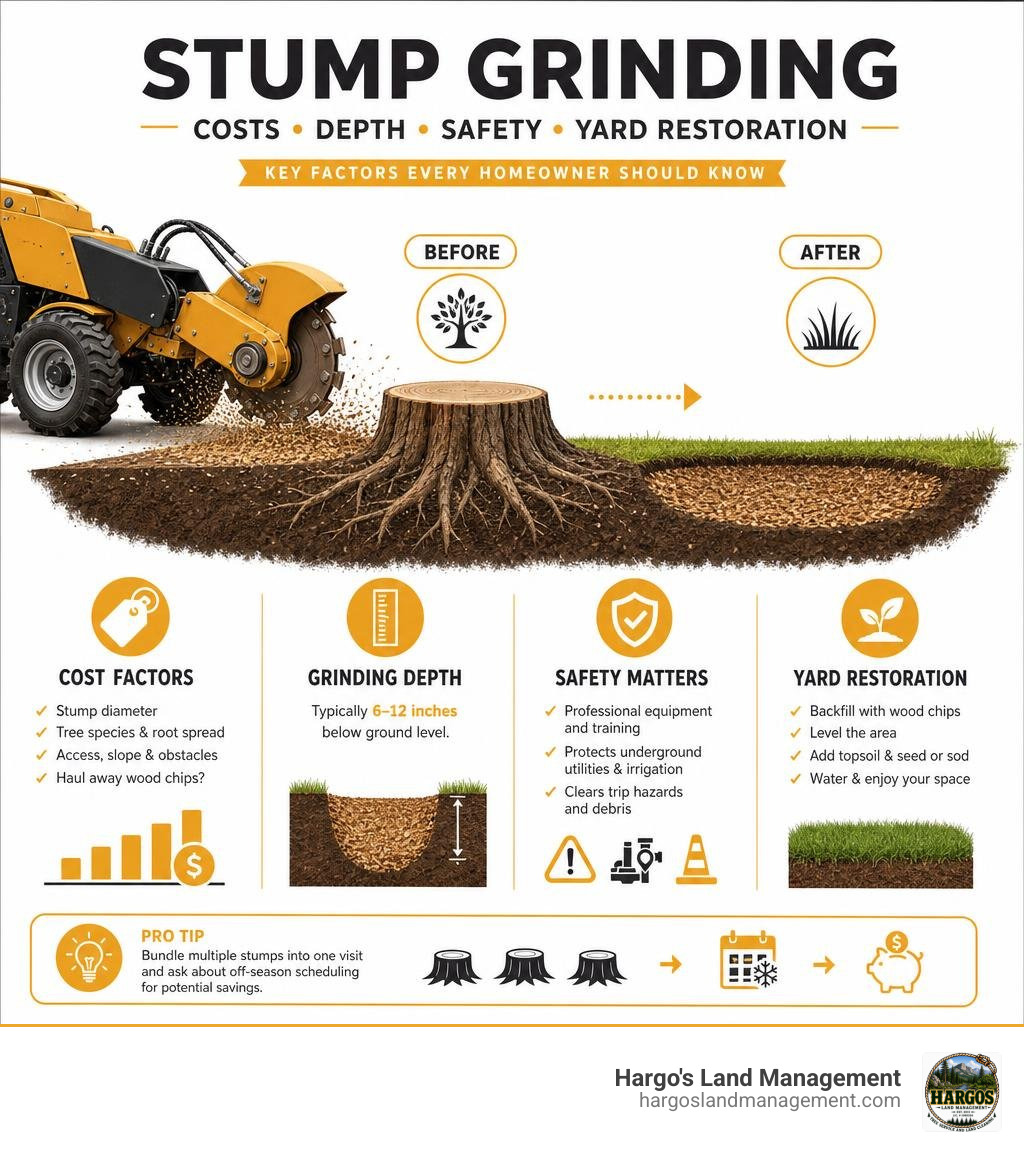
A stump grinding service removes the visible stump by turning it into wood chips below ground level, making the area safer to mow, easier to landscape, and less likely to collect pests or dry debris.
| Quick answer | What homeowners should expect |
|---|---|
| Typical cost | About $131 to $438 per job, with a national average near $272 |
| Common pricing method | Roughly $2 to $5 per inch of stump diameter, often with a minimum service fee |
| Typical grinding depth | Usually 6 to 12 inches below grade |
| Time required | Many residential stumps take 30 minutes to a few hours |
| Best cost-saving options | Bundle several stumps into one visit or ask about winter scheduling |
For El Dorado County property owners, an old stump can be more than an eyesore. It can create a trip hazard, interfere with brush clearing, limit access for mowing, and leave decaying material in areas where wildfire preparedness matters.
The final price depends on the stump’s diameter, tree species, root spread, slope, access through gates, rocks, and whether you want the wood chips hauled away. Professional work also includes the planning that helps protect irrigation, underground utilities, fences, and nearby structures.
This guide explains what a professional service includes, what it costs, where DIY can fall short, and how to restore the space after grinding.
What is a Professional Stump Grinding Service and How Does It Work?
A professional stump grinding service utilizes high-powered, commercial machinery equipped with a rotating steel wheel lined with carbide-tipped teeth. These heavy-duty teeth sweep horizontally back and forth across the stump, shaving the solid wood into fine wood chips and organic mulch. Unlike primitive methods like burning or applying chemical rots that take months or years to take effect, professional grinding eliminates the surface obstruction in a matter of minutes or hours.
The grinding process targets both the visible trunk remaining after a tree removal and the exposed surface roots flared around the base. Because tree roots spread outward across your lawn, specialized machines allow operators to track root systems and shave down elevated roots that create tripping hazards or break lawnmower blades.
Selecting a Stump Grinding Service vs. Complete Stump Removal
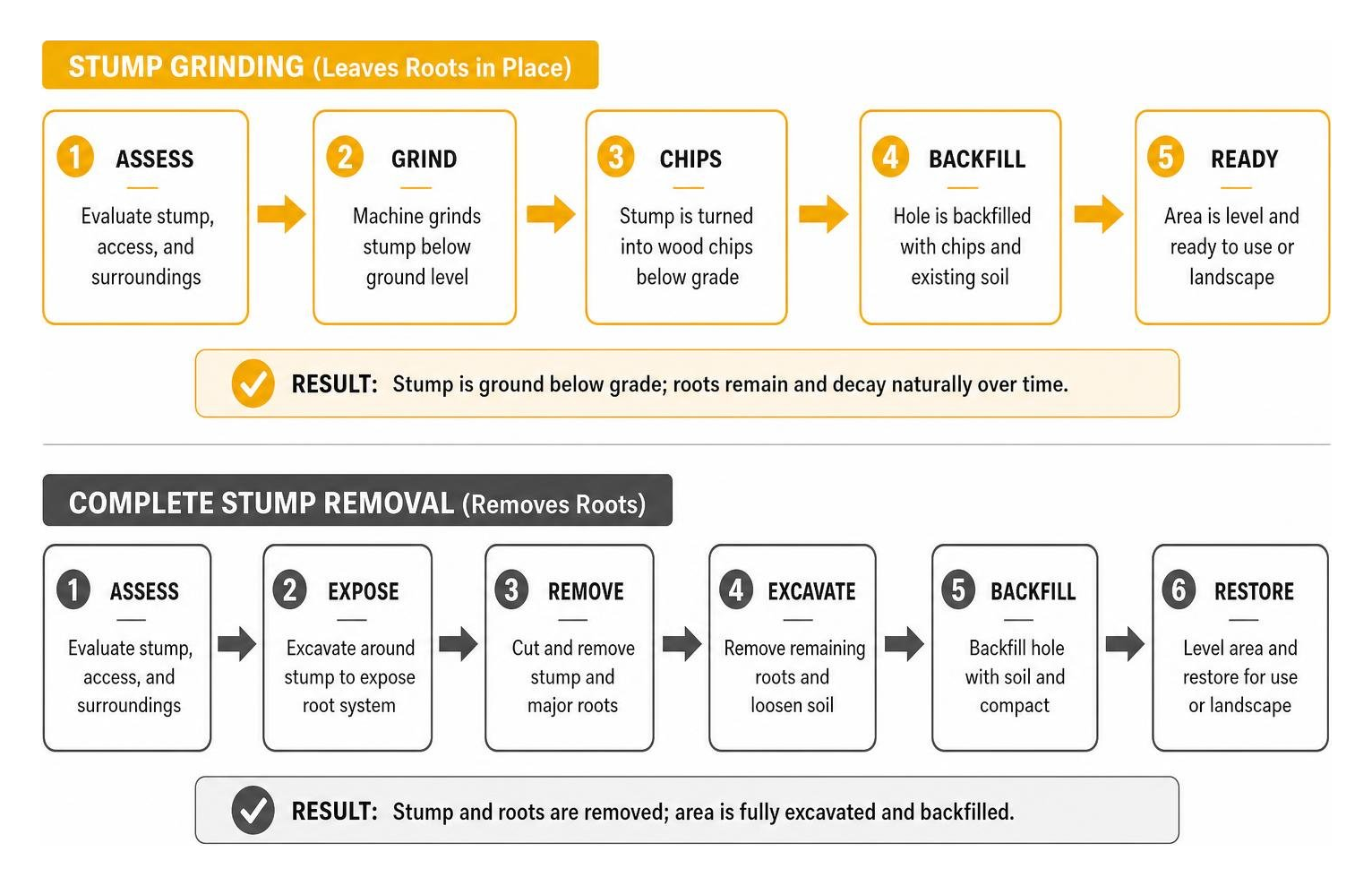
Homeowners often wonder whether they need stump grinding or complete stump removal. While the terms are sometimes used interchangeably, they represent two completely different procedures:
- Stump Grinding: The machine grinds the wood down below the dirt line, turning the stump into mulch while leaving the subterranean root ball in place to decay naturally over time. This approach preserves surrounding topsoil, protects nearby hardscapes, and causes minimal landscape disruption.
- Complete Stump Removal: This involves using heavy excavators or backhoes to physically pull the entire underground root ball out of the earth. It leaves a massive pit, disrupts surrounding lawns, and often costs two to three times as much due to extensive soil excavation and disposal fees.
For most residential properties, grinding is by far the preferred solution. Complete excavation is usually reserved for instances where you plan to lay building foundations or plant a mature replacement tree in the exact same footprint. If you recently had a hazardous tree taken down, pairing the job with a professional Hazardous Tree Removal team ensures your lawn recovers quickly without unnecessary digging.
Standard Depth and What Happens to Remaining Tree Roots
Standard residential grinding typically penetrates 6 to 12 inches below ground level. According to regional standards across the country, this depth provides ample clearance to lay topsoil, spread grass seed, or lay new sod directly over the old stump area. For specialized construction or garden bed installations, operators can perform deep-grinding techniques down to 12 or 18 inches below grade.
Once the main stump body is pulverized, homeowners frequently ask: Will the remaining roots keep growing?
The answer is no. Once the photosynthetic top of the tree is gone, the subterranean roots lose their nutrient supply and die. Over the following seasons, these underground roots naturally decompose beneath the soil without pushing up turf. Eliminating the above-ground stump also stops opportunistic pests—such as carpenter ants, termites, and wood-boring beetles—from colonizing rotting timber near your home.
How Much Does Stump Grinding Cost? (Pricing Factors & Breakdown)
Understanding contractor pricing helps you budget effectively and evaluate quotes. Across the United States, the average cost for a professional stump grinding job ranges from $131 to $438, with the national average sitting around $272 per job. Most contractors enforce a minimum service fee (usually around $100 to $200) to cover travel, fuel, and setup costs.
| Stump Size Category | Diameter Measurement | Average Cost Range |
|---|---|---|
| Small Stump | Under 12 inches | $100 – $150 |
| Medium Stump | 12 – 24 inches | $150 – $300 |
| Large Stump | Over 24 inches | $300 – $700+ |
When contractors bill by diameter, rates typically range from $2 to $5 per inch measured across the widest outer point of the stump’s flared base.
Diameter Size, Tree Species, and Hardwood Surcharges
Stump diameter is the single biggest factor influencing base price, but timber density plays an equally crucial role.
- Softwood Trees (Pine, Spruce, Fir, Cedar): Softwoods are softer and break apart easily under carbide teeth. They strain machinery less and require less fuel and time.
- Hardwood Trees (Oak, Maple, Elm, Walnut, Hickory): Hardwoods feature dense, tightly packed grain. Grinding a mature oak stump causes significant wear and tear on grinding teeth and takes considerably longer. As a result, contractors often apply a $50 to $150 surcharge per stump for dense hardwoods.
Additional Expenses: Debris Removal, Permits, and Site Access
When reviewing quotes, ensure you clarify what is included in the base rate. Additional variables that impact total job costs include:
- Debris and Wood Chip Removal: Grinding generates a substantial volume of wood chips mixed with soil. If you want contractors to haul away the debris rather than leave it on-site for garden mulch, expect an extra fee of $2 to $3 per inch of stump diameter. Combining this with professional Wood Chipping allows you to manage total yard waste efficiently.
- Site Access and Slopes: If a stump is tucked away behind a tight 36-inch backyard gate, on a steep slope, or adjacent to a concrete patio, maneuvering heavy equipment requires extra labor. Difficult access can add a labor surcharge of $50 to $100 per hour.
- Permits and Utility Markings: Municipal permits are rarely needed on private property unless the stump sits on a public easement, but calling 811 to locate underground utilities prior to digging or grinding is always mandatory and legally required.
Step-by-Step Guide to Yard Preparation and Safe Stump Grinding

Operating a commercial stump grinder involves high-speed cutter wheels spinning at thousands of RPMs. Safety and meticulous site preparation are crucial to preventing property damage and personal injury.
Step 1: Utility Locates and Site Preparation
Before any grinding wheel touches your property, utility lines must be identified to prevent catastrophic strikes to gas, electric, fiber optic, or water lines.
- Call 811: Always contact Call 811 at least two to three business days before work begins to have municipal utility locators mark buried lines with spray paint or flags.
- Clear Rocks and Debris: Stone, concrete, and metal debris can shatter carbide grinder teeth or launch out as hazardous projectiles. We inspect and clear the immediate area around the stump base.
- Erect Lawn Protection Barriers: Plywood sheets or specialized rubber screens should be placed around nearby windows, glass doors, vehicles, and neighboring structures to catch flying wood chips and stray gravel.
Step 2: Executing Grinding and Managing Debris
Once safety barriers are set, the operator positions either a walk-behind or heavy-duty track-mounted grinder over the target stump.
- Trimming the Trunk: If the tree stump was left tall, it is chainsawed as close to ground level as possible to reduce grinding time.
- Systematic Passes: The operator lowers the cutter wheel onto the leading edge of the stump, making smooth, side-to-side sweeping passes. The machine lowers a few inches deeper with each pass until reaching the desired depth of 6 to 12 inches below grade.
- Surface Root Tracing: The grinder follows major surface roots extending outward, smoothing out the surrounding lawn.
- Mulch Management: The resulting mixture of soil and wood shavings settles into the newly created hole. Homeowners can retain this organic matter as free landscaping mulch or opt to take advantage of local Free Wood Chips programs for garden beds.
DIY Grinding vs. Professional Hiring: Money-Saving Strategies
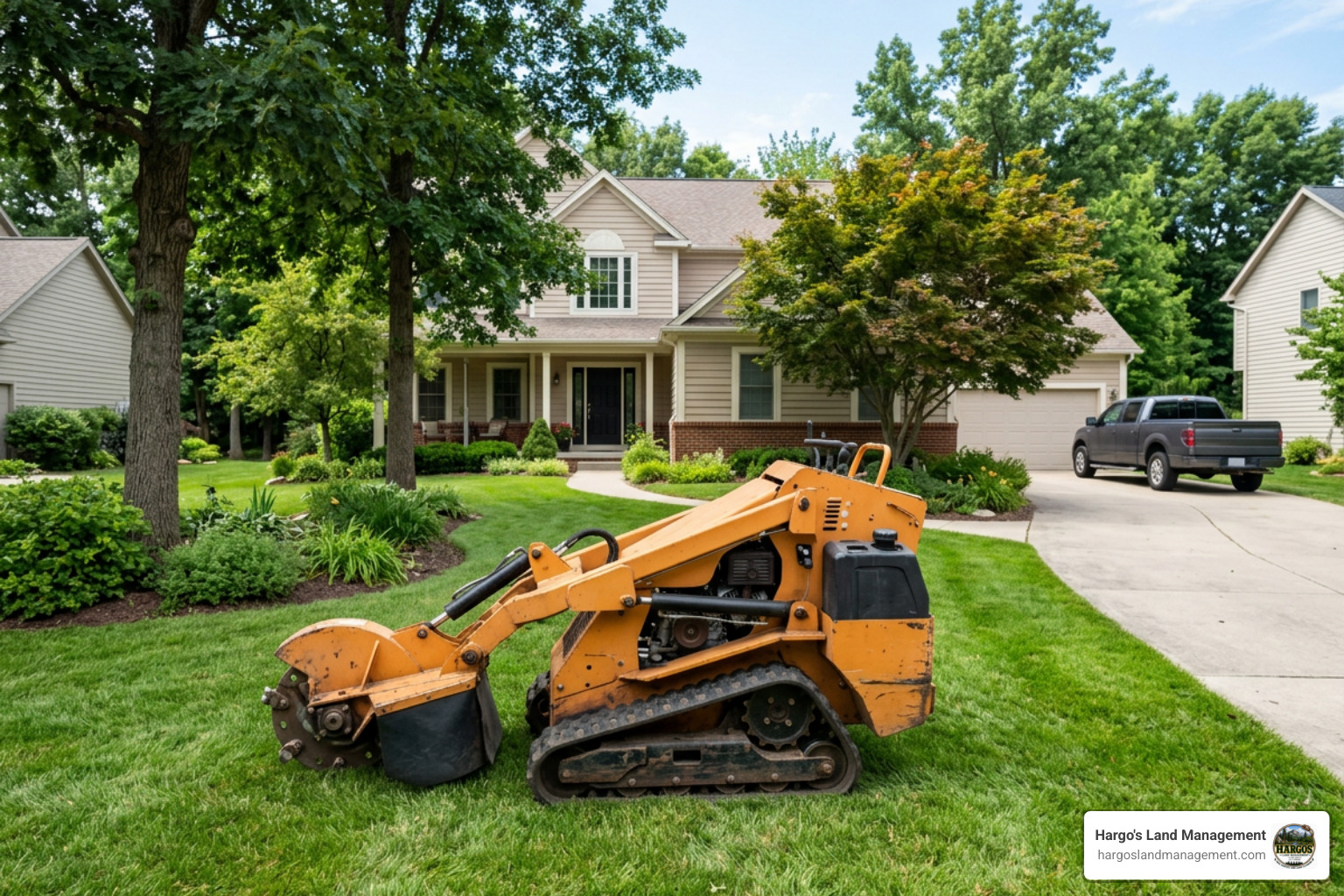
It is common for property owners to consider renting a stump grinder from a home improvement store to tackle the job themselves. However, analyzing the true costs of DIY equipment rental often reveals that hiring a commercial stump grinding service provides better value, higher safety, and superior results.
Evaluating DIY Rental Costs vs. Hiring a Professional Stump Grinding Service
Renting a small tow-behind or walk-behind stump grinder typically costs between $178 and $364 per day, with an average daily rental fee around $260. While this might seem economical on the surface, several hidden factors quickly accumulate:
- Transportation Requirements: Rental grinders weigh between 500 and 1,500 pounds, requiring a truck with a hitch or a heavy-duty trailer for transport.
- Power Differences: Commercial services use 35 to 75+ horsepower diesel or gas-tracked units. Rental units usually range from 13 to 25 horsepower. A stump that takes a professional machine 20 minutes to process can take 3 to 5 hours with a small rental machine.
- Physical Strain and Safety: Operating high-vibration machinery without proper experience presents genuine safety risks and physical exhaustion.
Buying a commercial-grade grinder ($2,500 to $3,500+) only reaches financial break-even after removing 8 to 12 large stumps. For one or two stumps, utilizing dedicated professional Stump Grinding saves time, avoids equipment damage liability, and guarantees proper depth.
Cost-Saving Tips: Winter Discounts and Multi-Stump Bundling
If you want to reduce professional service expenses, strategic scheduling offers excellent savings:
- Bundle Multiple Stumps: Contractors incur the highest setup and transport cost on the first stump (around $123+). The cost for grinding additional stumps during the same visit drops significantly—often down to $37 to $70 per additional stump.
- Schedule in the Off-Season: Tree care services experience lower demand during winter months. Many companies offer off-peak discounts of 10% to 20% for winter scheduling.
- Combine Property Services: Pair stump removal with broader land management tasks such as fire safety work, tree pruning, or Brush and Land Clearing to maximize multi-service volume discounts.
Post-Grinding Yard Restoration and Defensible Space Creation
Once grinding is completed, taking the right restoration steps transforms a messy pit into a lush, level landscape:
- Rake and Reroute Wood Chips: Pull excess wood chips out of the hole. Leaving too much dense fresh mulch in a deep pit starves the soil of nitrogen as it breaks down, making it difficult for grass to thrive.
- Backfill with Topsoil: Fill the depression with a high-quality mix of topsoil and organic compost, mounding it roughly 1 to 2 inches above the surrounding lawn to account for future soil settling.
- Seed or Sod: Tamp down the topsoil gently, spread appropriate grass seed, and apply a thin starter fertilizer layer. Water daily until established.

For homeowners living in fire-prone regions like El Dorado County, removing old stumps and surface roots serves a vital dual purpose: creating defensible space. Rotting tree stumps act as dry fuel repositories that can harbor creeping embers during a wildfire. Grinding stumps flush and backfilling them with clean soil eliminates ember catchers, clears fuel breaks, and integrates smoothly into your overall Vegetation Management strategy.
Frequently Asked Questions About Stump Grinding
Is stump grinding safe for my lawn and underground utilities?
Yes, when performed by licensed professionals. By contacting 811 prior to operation, operators identify all buried utility lines. Professional crews use specialized rubber ground-mats or wide-track machinery that distributes weight evenly, preventing ruts on delicate turf, sprinkler heads, or surrounding hardscapes.
How long does a typical stump grinding job take?
Most residential stump grinding jobs take between 30 minutes and 2 hours per stump. The exact timeframe depends on tree diameter, timber density (hardwood vs. softwood), soil rockiness, and site accessibility. Small softwood stumps under 12 inches can often be ground down in 15 to 20 minutes.
What should I do with the wood chips and hole after grinding?
You have several great options:
- Mulch Re-use: Spread the fresh wood chips across flower beds, around tree drip lines, or along walking paths to suppress weeds and retain soil moisture.
- Composting: Mix wood chips with nitrogen-rich greens in your compost pile.
- Complete Haul Away: Have your contractor haul the material off-site, fill the pit with fresh topsoil, and seed the area for immediate turf recovery.
Conclusion
Leaving an old tree stump in your yard creates unwanted tripping risks, invites wood-boring pests, damages lawnmowers, and creates dry fuel pockets in wildfire-sensitive areas. A professional stump grinding service provides a fast, minimally invasive, and budget-friendly solution to eliminate unwanted stumps while preserving your lawn’s health and beauty.
At Hargo’s Land Management, we provide licensed, bonded, and insured tree services, brush clearing, and defensible space management tailored to property owners throughout El Dorado County, including Placerville and South Lake Tahoe. Whether you need a single nuisance stump ground down or comprehensive property fire-safety clearing, our team delivers prompt, high-quality, local service.
Contact us today to schedule your free on-site estimate and reclaim your yard with our expert Defensible Space Clearing and stump grinding solutions.
CUSTOMER REVIEWS & TESTIMONIALS
We strive to exceed your expectations. See what our customers have to say.















CONTACT US TODAY
Serving El Dorado and Surrounding Counties
Locally owned and operated since 2013. Use our live chat support to get in touch about your land management needs today.
Request a free evaluation and estimate by completing our online form or book an on-site appointment.
El Dorado County: El Dorado Hills, Cameron Park, Shingle Springs, Coloma, Placerville, Camino, Pollock Pines, South Lake Tahoe and more...
Amador County: Jackson, Ione, and Surrounding Towns
Sacramento County: Sacramento and Surrounding Cities
Placer County: Roseville, Rocklin, Auburn, and Everything In Between
Nevada County: Penn Valley, Nevada City, Grass Valley