
Save Your Yard by Booking a Full Tree Removal Service Today
Signs You Need a Professional Full Tree Removal Service
Spotting a problematic tree early can save your home, driveway, and lawn from severe structural damage. While trees offer shade and beauty, an unstable tree is a ticking time bomb. Knowing when a tree crosses the line from a natural asset to an immediate hazard is crucial for every property owner.
When structural failure occurs, an unexpected fall can crush roofs, sever utility lines, or block critical access roads. Inspecting your property regularly helps you catch issues before the next heavy storm forces an emergency response.
Comparing Trimming vs. a Full Tree Removal Service
Deciding between simple pruning and a full tree removal service usually comes down to structural integrity and tree biology. Pruning and crown reduction work well for routine maintenance, minor canopy thinning, or clearing small branches away from rooflines.
However, trimming cannot save a tree suffering from systemic rot, extensive root failure, or major trunk hollows. Certified arborists generally follow strict pruning limits: removing more than 25% of a tree’s living canopy in a single season can stress the tree and trigger decline. If a tree requires drastic cutting just to be rendered safe, complete removal is usually the healthier, more cost-effective choice for your landscape.

Key Indicators of Hazardous and Dying Trees
Look for these warning signs when inspecting the trees on your property:
- Trunk Cracks and Deep Fissures: Long vertical cracks extending deep into the trunk signal severe structural splitting.
- Fungi and Mushroom Clusters: Shelf mushrooms or decay fungi growing around the base or trunk indicate internal heartwood rot.
- Hollow or Decaying Trunks: While some hollow trees survive, a thin shell of living wood around a hollow core makes the tree extremely vulnerable to wind throw.
- Canopy Dieback and Deadwood: A sparse canopy, premature leaf drop, or large dead branches (“widowmakers”) clinging to the upper crown point to rapid health decline.
- Sudden Leaning Angle: A tree that suddenly develops a sharp lean—especially with raised or cracked soil on the opposite side—indicates active root system failure.
- Pest Infestations: Severe damage from wood-boring insects like oak borers or bark beetles weakens internal support structures beyond repair.
The Complete Professional Tree Removal Process
Removing a tree—especially a mature, multi-ton pine, oak, or eucalyptus—is a complex engineering task. It requires careful planning, specialized equipment, and technical rigging to bring down heavy timber safely in tight residential spaces.
What to Expect During a Full Tree Removal Service
When you hire a professional team, the job follows a controlled, step-by-step sequence designed to minimize impact on your lawn and hardscapes:
- On-Site Evaluation & Setup: The crew lead evaluates nearby structures, overhead power lines, and ground drop zones. Workers set up ground-protection mats to protect lawns and driveways from heavy equipment weight.
- Climbing & Technical Rigging: A certified climber or bucket truck operator ascends into the canopy. Using specialized lowering ropes, friction brakes, and pulleys, the team individually ties off and lowers heavy branches piece by piece.
- Trunk Takedown: Once the canopy is stripped, the main trunk is sectioned from the top down into manageable logs using controlled directional relief cuts.
- Debris Processing & Site Cleanup: Branches are fed directly into high-capacity wood chippers, while heavy wood sections are loaded into trucks or stacked per your preferences. The site is then raked clean of loose debris.
Tree Removal vs. Stump Grinding vs. Lot Clearing
It is important to understand that basic tree removal ends at ground level. Complete property restoration or fire safety prep may require additional specialized services:
| Service Type | Primary Purpose | Equipment Used | Final Result |
|---|---|---|---|
| Full Tree Removal | Cuts tree down safely to a low stump above soil level. | Chainsaws, rigging ropes, bucket trucks, cranes. | Tree canopy and trunk removed; stump remains visible. |
| Stump Grinding | Mechanical shaving of the stump 6 to 12 inches below grade. | Specialized hydraulic stump grinders. | Sub-grade wood chips; flat ground ready for turf or soil. |
| Lot & Brush Clearing | Clears dense brush, saplings, and multiple trees over a large area. | Skid steers, masticators, grapple trucks. | Fire-safe defensible space; clear land for building or fire lines. |
Tree Removal Costs, Pricing Factors, and Permits
Tree removal costs vary significantly based on tree height, location, and structural risk. Standard market benchmarks provide helpful reference points for planning your budget:
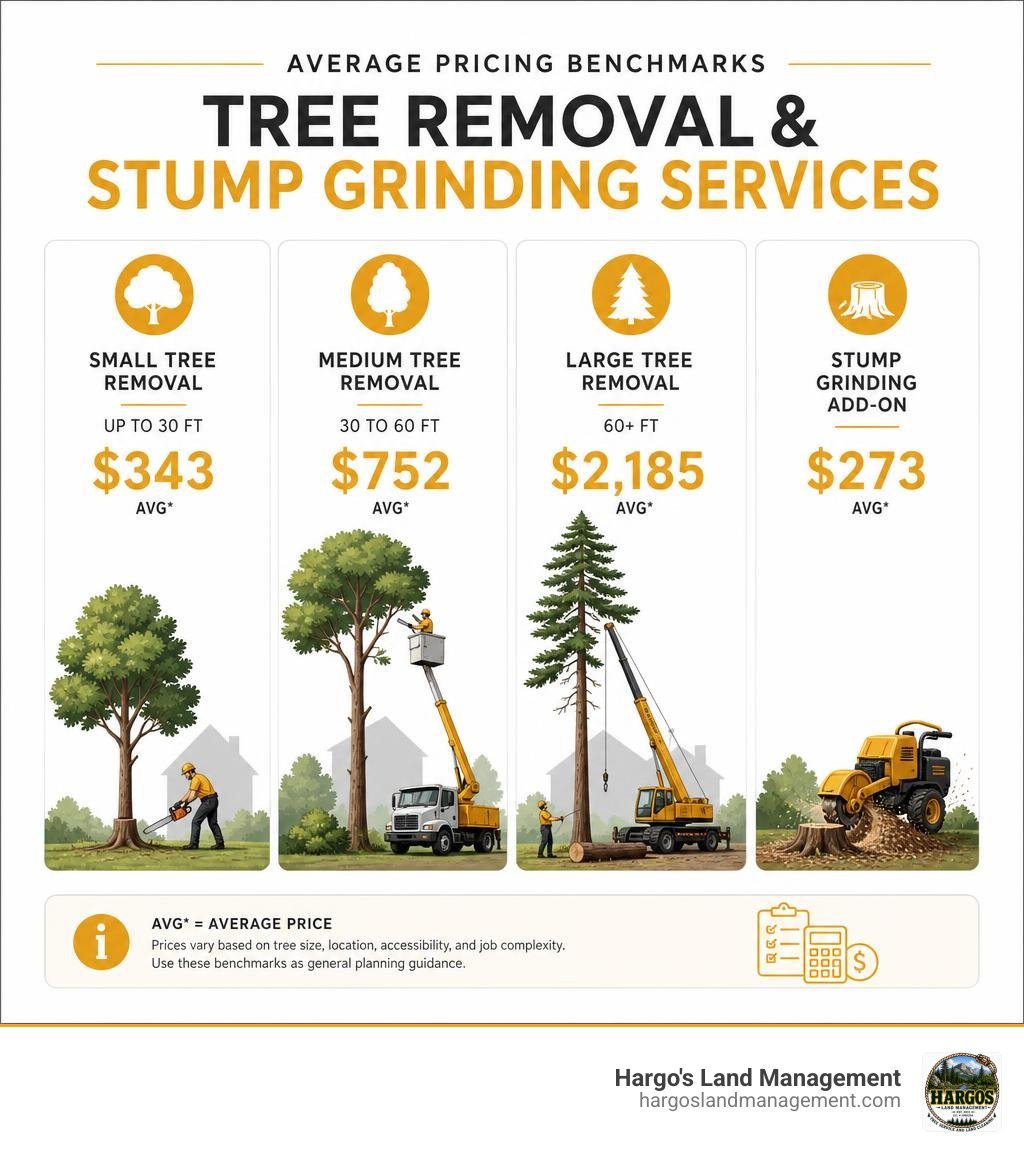
- Small Tree Removal (up to 30 ft): $343 average price
- Medium Tree Removal (30 to 60 ft): $752 average price
- Large Tree Removal (60+ ft): $2,185 average price
- Stump Grinding Add-On: $273 average price
Understanding Tree Removal Cost Factors
Pricing is determined by job complexity, time, and necessary safety gear. Key pricing factors include:
- Tree Size and Diameter: Taller trunks with massive girth require larger crews, heavier gear, and more cut time.
- Site Accessibility: Trees wedged into landlocked backyards or narrow side yards demand manual climbing and slow branch lowering, increasing labor hours.
- Proximity to Hazards: Trees leaning over houses, glass sunrooms, or power lines require specialized crane setups or dual bucket trucks to lower sections without damaging property.
- Emergency Response: Immediate, 24/7 mobilization following severe windstorms or storm damage carries a premium due to hazardous working conditions.
Navigating Municipal Permits and Property Regulations
Before starting work, check your local municipal guidelines. Many cities enforce strict Tree Protection Ordinances, heritage tree preservation laws, or environmental protection codes:
- Private vs. Parkway Trees: Trees standing near street curbs or parkways may be public property. Handling street-adjacent trees often requires a municipal permit, such as a Road Encroachment Permit.
- Arborist Health Reports: Municipalities often require a formal report from an International Society of Arboriculture (ISA) Certified Arborist proving that the tree is dead, diseased, or hazardous before issuing a removal permit.
- Defensible Space Requirements: In fire-prone regions, local fire codes and home insurance policies may mandate brush clearing and tree thinning within a 100-foot defensible space zone around your home.
Hiring a Qualified Arborist and Ensuring Safety Standards

Tree care and removal ranks among the most hazardous occupations in the United States. Working at high elevations with heavy power tools and dangerous forces leaves zero room for error. Choosing a fully qualified contractor is essential to protect your home and avoid potential liability.
Essential Safety Precautions and Heavy Equipment
Professional tree crews rely on specialized equipment to handle complex takedowns safely:
- Personal Protective Equipment (PPE): Chainsaw chaps, hard hats, eye protection, ear defenders, and steel-toe boots are standard safety essentials.
- Rigging Lines and Friction Devices: High-tensile synthetic ropes and lowering bollards allow crews to control and softly land multi-hundred-pound limbs.
- Spider Lifts and Crane Deployment: Specialized spider lifts can maneuver through gate openings as narrow as 36 inches while providing reach up to 78 feet. Cranes easily lift entire tree sections over roofs in tight neighborhood spaces.
- Power Line Protocols: Crews working within close proximity to utility lines undergo electrical hazard training or coordinate temporary power line drops with local electric utilities.
How to Choose a Qualified Tree Service Contractor
Never hire an unvetted contractor who knocks on your door after a storm offering quick cash discounts. Use this verification checklist before signing any contract:
- Verify Licensing: Ensure the contractor holds an active state contractor’s license in good standing.
- Check Insurance Certificates: Demand direct proof of General Liability insurance and Workers’ Compensation coverage. Without workers’ compensation, a home owner can be held liable if a worker is injured on their property.
- Verify ISA Certification: Confirm that the company employs ISA Certified Arborists who follow strict industry safety standards.
- Get Written, Detailed Scope of Work: Ensure the formal estimate clearly states whether branch hauling, wood chipping, stump grinding, and final rake-up are included in the price.
Frequently Asked Questions About Tree Removal
Do I need a permit to remove a tree on my property?
It depends on your local municipality, the tree species, and its overall trunk diameter. Many local governments protect specific heritage trees, native oaks, or coastal species. Removing a protected tree without a permit can result in heavy municipal fines. Always consult a certified arborist or check local planning department codes before removing mature trees.
How long does a typical tree removal project take?
Most residential tree removals take anywhere from 2 hours to a single full day. Small to medium trees with easy access are routinely cleared in 2 to 4 hours by a well-equipped 4-person crew. Large, complex trees located in tight spaces or near power lines may take 8 hours or longer, especially if crane rigging or manual climbing is required.
What should I do in an emergency storm damage situation?
If a tree falls on your home, vehicle, or power line, prioritize safety first:
- Evacuate the Immediate Area: Keep clear of fallen branches under tension or trees resting on structure roofs.
- Report Power Line Hazards: Treat all down wires as live. Contact your utility provider immediately.
- Document damage: Take photos and videos from a safe distance for insurance purposes.
- Call an Emergency Service Team: Contact a licensed 24/7 tree contractor. Many experienced crews provide direct insurance billing services, documenting structural damage and submitting photos directly to your insurance adjuster to expedite claim processing.
Conclusion
Leaving an unstable, decaying, or hazardous tree in your yard places your home, family, and landscape at serious risk. Taking proactive action before high winds or storm conditions cause a catastrophe preserves your property value and restores peace of mind.
For property owners seeking expert residential tree care, fire safety brush management, and clear safety compliance, Hargo’s Land Management delivers reliable expertise across El Dorado County. As a locally owned, licensed, bonded, and insured team, we provide free on-site estimates and rapid response to protect your landscape. Contact our certified specialists today to schedule an evaluation and safeguard your home.
CUSTOMER REVIEWS & TESTIMONIALS
We strive to exceed your expectations. See what our customers have to say.















CONTACT US TODAY
Serving El Dorado and Surrounding Counties
Locally owned and operated since 2013. Use our live chat support to get in touch about your land management needs today.
Request a free evaluation and estimate by completing our online form or book an on-site appointment.
El Dorado County: El Dorado Hills, Cameron Park, Shingle Springs, Coloma, Placerville, Camino, Pollock Pines, South Lake Tahoe and more...
Amador County: Jackson, Ione, and Surrounding Towns
Sacramento County: Sacramento and Surrounding Cities
Placer County: Roseville, Rocklin, Auburn, and Everything In Between
Nevada County: Penn Valley, Nevada City, Grass Valley